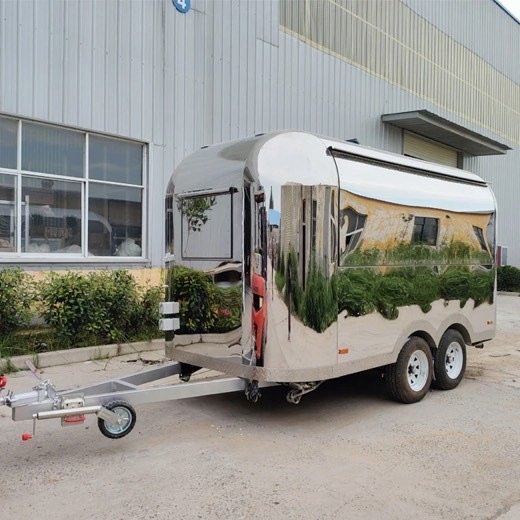
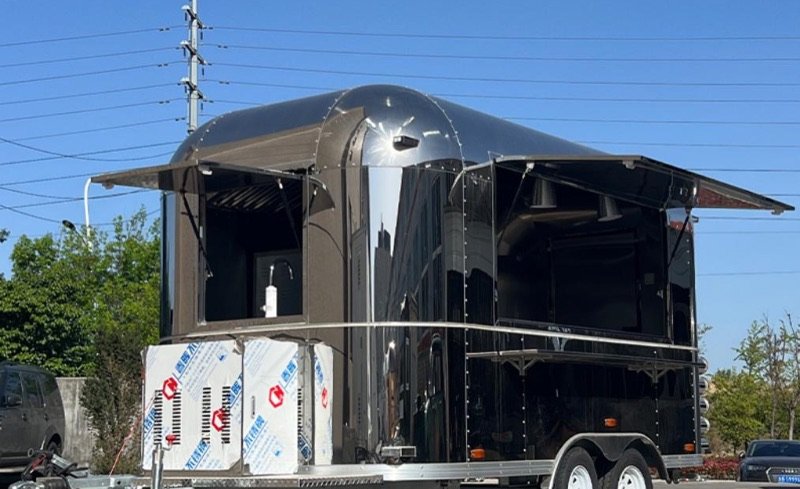
Side by side
| Food trailer | Food truck | |
|---|---|---|
| Engine | None; towed by a pickup or truck | Built in |
| Purchase price | Usually lower for the same kitchen | Higher, because you also buy a vehicle |
| Maintenance | Axles, tires, brakes, lights | Full vehicle maintenance plus the kitchen |
| If the vehicle breaks | Hitch it to another truck | The kitchen is out of service too |
| Kitchen space | More usable space for the length | Cab and engine take space |
| At events | Unhitch and use your truck for supplies | Stays in one piece |
| Moving often | Needs a tow vehicle and more parking space | Easier to move and park daily |
| Health license (Texas) | Same DSHS mobile food vendor license | Same DSHS mobile food vendor license |
When a trailer makes more sense
- You will stay at one spot, a food park or events for hours or days.
- You want more kitchen for the money.
- You already own a pickup that can tow the weight.
- You do not want engine repairs to stop your business.
When a truck makes more sense
- You move several times a day.
- Parking space is tight.
- You do not have, or do not want, a tow vehicle.
Check your tow vehicle
An equipped 16 ft trailer is heavy. Compare the trailer's gross vehicle weight rating (GVWR) on its federal label with your vehicle's towing capacity, and use a hitch and brake controller rated for it. Our model pages list size and axle setup; ask us for the weight of your configuration.
Questions
Is the permit different for a trailer?
In Texas, both are licensed by DSHS as mobile food vendors. Fire, zoning and parking rules are local.
Can a trailer be titled like a truck?
A trailer is titled and registered separately at the county tax office. It needs a Manufacturer's Certificate of Origin and, above 4,000 lbs, a title.
Sources
Rules and fees change. Confirm current requirements with the agency before you apply.