What changed in 2026
House Bill 2844, passed by the Texas Legislature in 2025, moved health licensing for food trucks, food trailers, pushcarts and roadside vendors to DSHS. Beginning July 1, 2026, a vendor may not operate without a DSHS-issued mobile food vendor (MFV) license. Cities such as Austin are transitioning their mobile vending programs to the state.
Cities and counties still handle other rules, such as fire inspections, zoning and where you may park and sell. Check those locally (see permits by city).
The three license types
DSHS sorts vendors by what they serve and how much food handling happens on board:
| Type | Who it is for | Examples from DSHS |
|---|---|---|
| Type I | Vendors that do not sell time and temperature control for safety (TCS) foods, or are otherwise low risk | Prepackaged ice cream |
| Type II | Prepackaged TCS food with limited handling, or TCS food prepared to order for immediate service; may include cold holding, thawing or reheating commercially packaged products | Coffee trucks, snow cone vendors, hot dog vendors |
| Type III | Vendors that prepare, cook, hold and serve food from the vehicle; may include hot holding, cooling or cooking | Burger, BBQ and taco trucks |
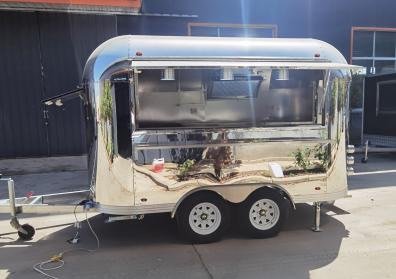
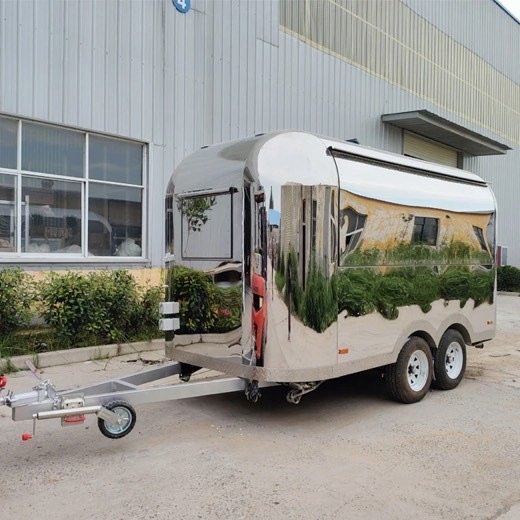
In our lineup, the coffee and beverage trailers typically fall under Type II and the kitchen trailers under Type III. Your exact type depends on your menu, so confirm it with DSHS.
Fees
Fees published by DSHS (October 2026). Application fees include a Texas Online fee.
| Type | Application fee | Pre-licensing inspection | Routine inspection | Complaint or compliance inspection |
|---|---|---|---|---|
| Type I | $309 | Not required | Not required | $300 |
| Type II | $618 | $400 | $400 | $400 |
| Type III | $876 | $500 | $500 | $500 |
The license expires one year from the date the pre-licensing inspection is successfully completed.
How to apply, step by step
- Decide your license type based on your menu.
- Apply and pay through the DSHS Online Licensing Services portal.
- DSHS processes the application and contacts you to schedule the pre-licensing inspection (Type II and Type III).
- Pass the inspection. Vendors without a current Texas license may not operate until the pre-licensing inspection is completed.
- Keep your license documents on the vehicle and renew yearly.
Vendors who already held a Texas local license before July 1, 2026 could keep operating if they submitted a complete application with fees and kept the application summary on the vehicle.
Getting your trailer inspection-ready
Health inspectors look at the trailer itself: sinks, hot and cold water, water tanks, food-contact surfaces, refrigeration and how food is protected. Before you buy, make sure the trailer has:
- A 3-compartment sink with drainboards and a separate hand sink
- Hot and cold running water, with fresh and waste water tanks sized for your service
- Smooth, durable, easy-to-clean surfaces such as stainless steel
- Refrigeration that holds cold food at safe temperatures
- Commercial cooking and refrigeration equipment (NSF or ETL listed)
Every TX Food Trailers model is specified with these items and lists them on the model page.
Questions
Do I still need a City of Houston health permit?
Since July 1, 2026, health licensing for mobile food vendors is handled by DSHS statewide. The City of Houston Fire Marshal still issues fire permits for units that cook with propane, and local parking and zoning rules still apply.
Is one license enough for two trailers?
DSHS issues the license for each food vending vehicle. Plan on one license and one inspection per trailer.
Which type is a coffee trailer?
DSHS lists coffee trucks and snow cone vendors as Type II examples. A trailer that cooks to order, such as tacos or BBQ, is Type III.
Sources
- Texas DSHS: Mobile Food Vendors
- DSHS Online Licensing Services
- KSAT: Texas opens applications for statewide mobile vendor license (June 2026)
- City of Austin: Mobile Food Vendors
Rules and fees change. Confirm current requirements with the agency before you apply.